2025 Flying Recap: 48 Flights, 157,505 km, and a Few Standouts
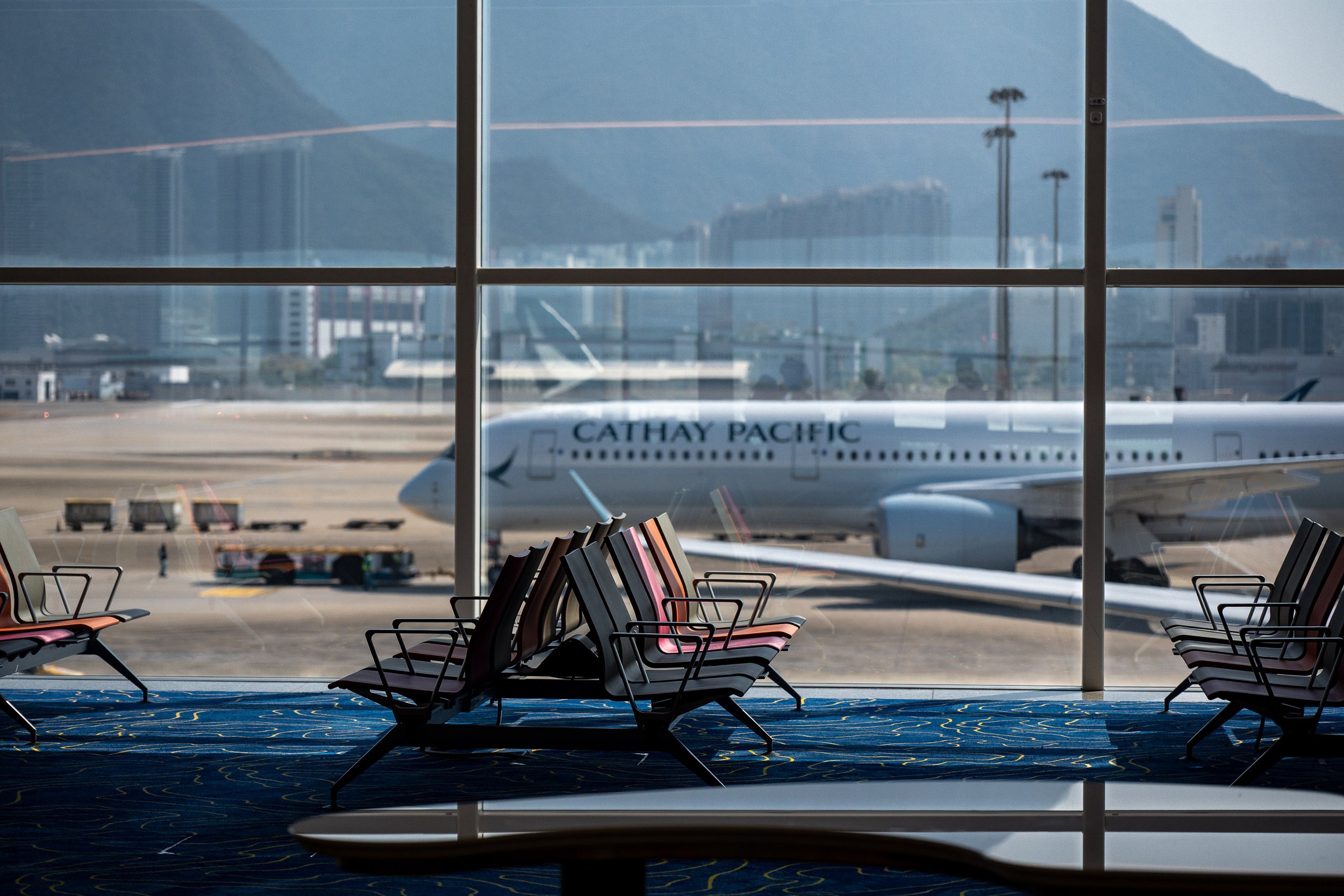
Hong Kong International Airport, with Cathay Pacific Airbus A350-900 in the background
A bit late, but I still wanted to do this.
It’s already months into 2026, and 2025 feels like it happened in a blur of boarding passes, lounge bubbles, and airport routines: countless hours looking out the window, time disappearing into inflight entertainment, and the familiar rhythm of terminals on repeat. I pulled my Flighty year review and put together a factual recap of what my flying in 2025 actually looked like: the totals, the longest sectors, the most-flown aircraft types, and a few flights that stood out.
2025 at a glance
48 flights
157,505 km (about 3.9x around Earth)
225 hours 47 minutes in the air (9 days 10 hours)
37 total routes
25 airports
12 airlines
20 countries & territories
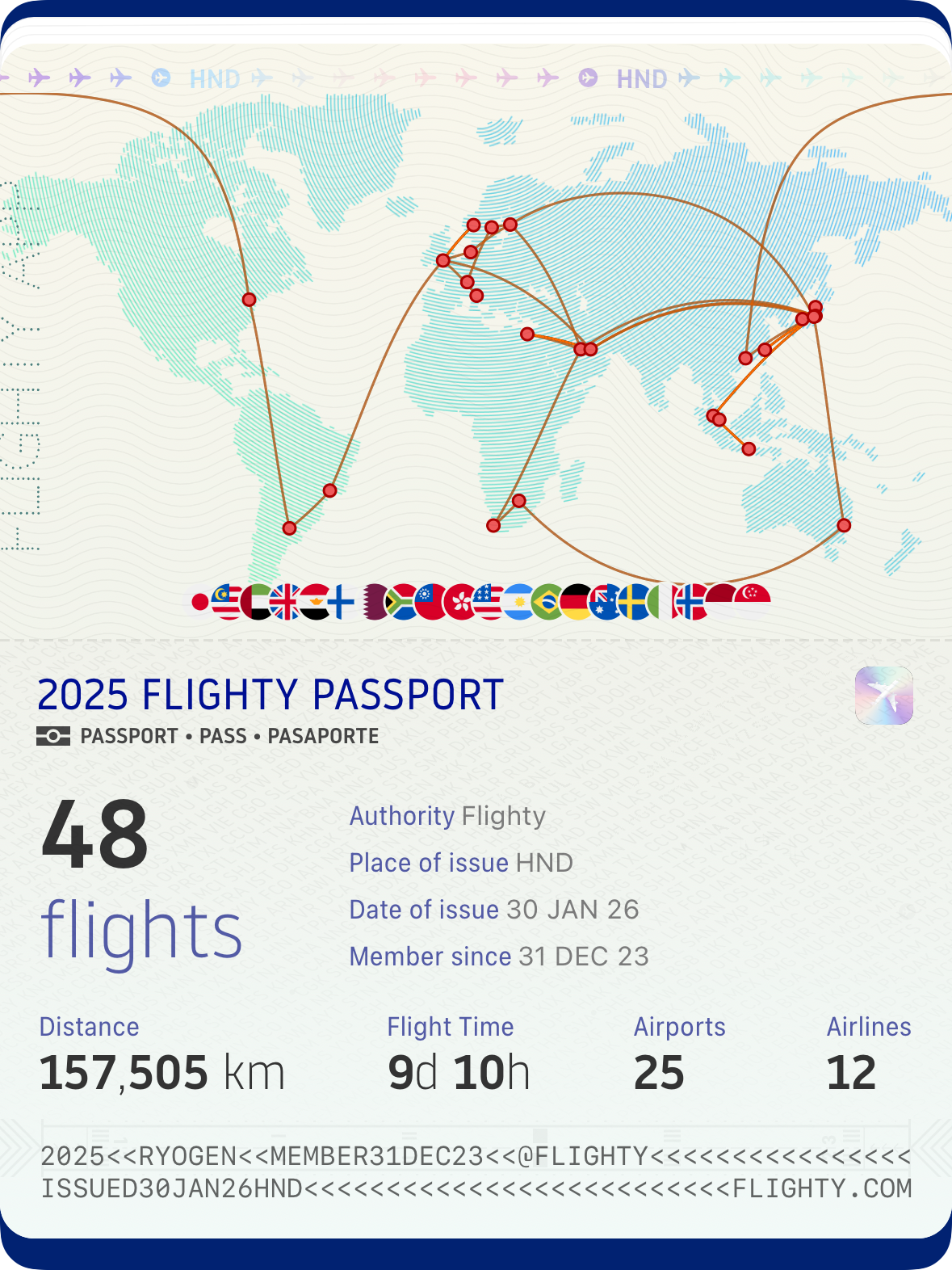
Flighty 2025 year review showing 48 flights, 157,505 km, and 9 days and 10 hours flown.
Longest flights
By distance
Hong Kong (HKG) → New York (JFK) — 12,969 km (Cathay Pacific CX844)
Johannesburg (JNB) → Sydney (SYD) — 11,044 km (Qantas QF64)
Rio de Janeiro (GIG) → London (LHR) — 9,254 km (British Airways BA248)
New York (JFK) → Buenos Aires (EZE) — 8,534 km (American Airlines AA953)
Doha (DOH) → Tokyo (NRT) — 8,298 km (Qatar Airways QR806)
By time
Hong Kong (HKG) → New York (JFK) — 15 hours 27 minutes (Cathay Pacific CX844)
Tokyo (HND) → Helsinki (HEL) — 12 hours 48 minutes (Finnair AY62)
Tokyo (HND) → Dubai (DXB) — 12 hours 21 minutes (Emirates EK313)
Johannesburg (JNB) → Sydney (SYD) — 11 hours 50 minutes (Qantas QF64)
Rio de Janeiro (GIG) → London (LHR) — 11 hours 28 minutes (British Airways BA248)
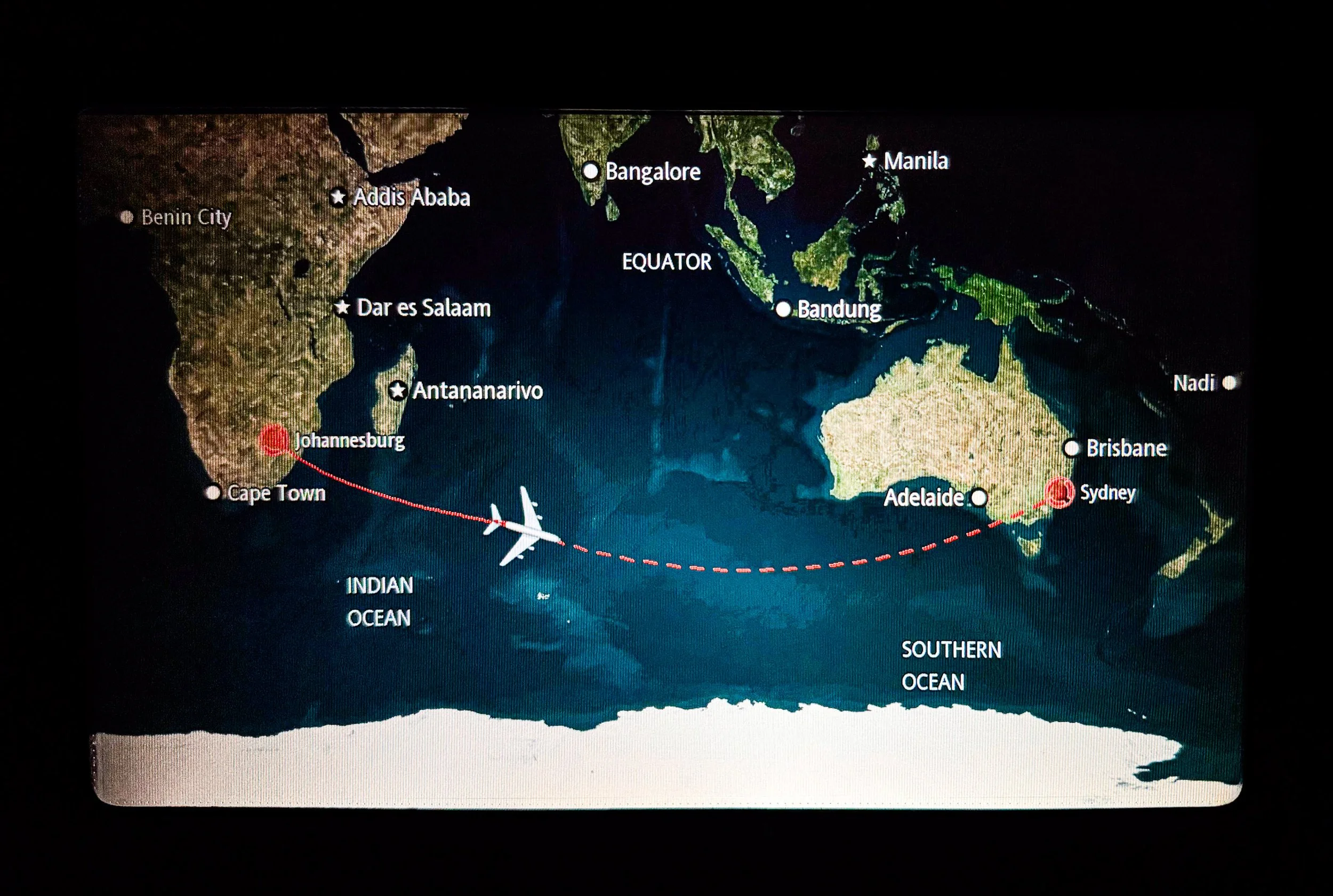
Qantas QF64 inflight map showing the uniqueness of our Southern Hemisphere routing from Johannesburg to Sydney
The “longest flight” label depends on whether you measure by distance or time, and those two don’t always line up.
On time, a good example is Finnair AY62 from Tokyo Haneda (HND) to Helsinki (HEL). It ranked second-longest in 2025 at 12h 48m, largely because the routing has been affected by airspace constraints and detours tied to ongoing geopolitical uncertainty. In other words, it’s not inherently one of the world’s longest city pairs, but it flew like one.
At the top of my 2025 list though, was a flight that led on both metrics: Cathay Pacific CX844 from Hong Kong (HKG) to New York (JFK). It logged 15h 27m and 12,969 km, making it my longest flight of the year by both time and distance.
What made CX844 even more memorable was the context. It was only the second of three flights on a single journey from Tokyo Haneda (HND) to Buenos Aires (EZE) via Hong Kong (HKG) and New York (JFK). I left Tokyo on Friday morning, arrived into JFK in the early hours of Saturday, and later that same Saturday night continued south on American Airlines AA953 from New York (JFK) to Buenos Aires (EZE), which also made my 2025 longest-flights list by distance.
Most-flown aircraft (and what that says about the year)
Workhorse of the year: Airbus A330-300 (A333)
The aircraft type that dominated my 2025, both in time and distance, was the A330-300.
6 flights
40 hours
27,998 km
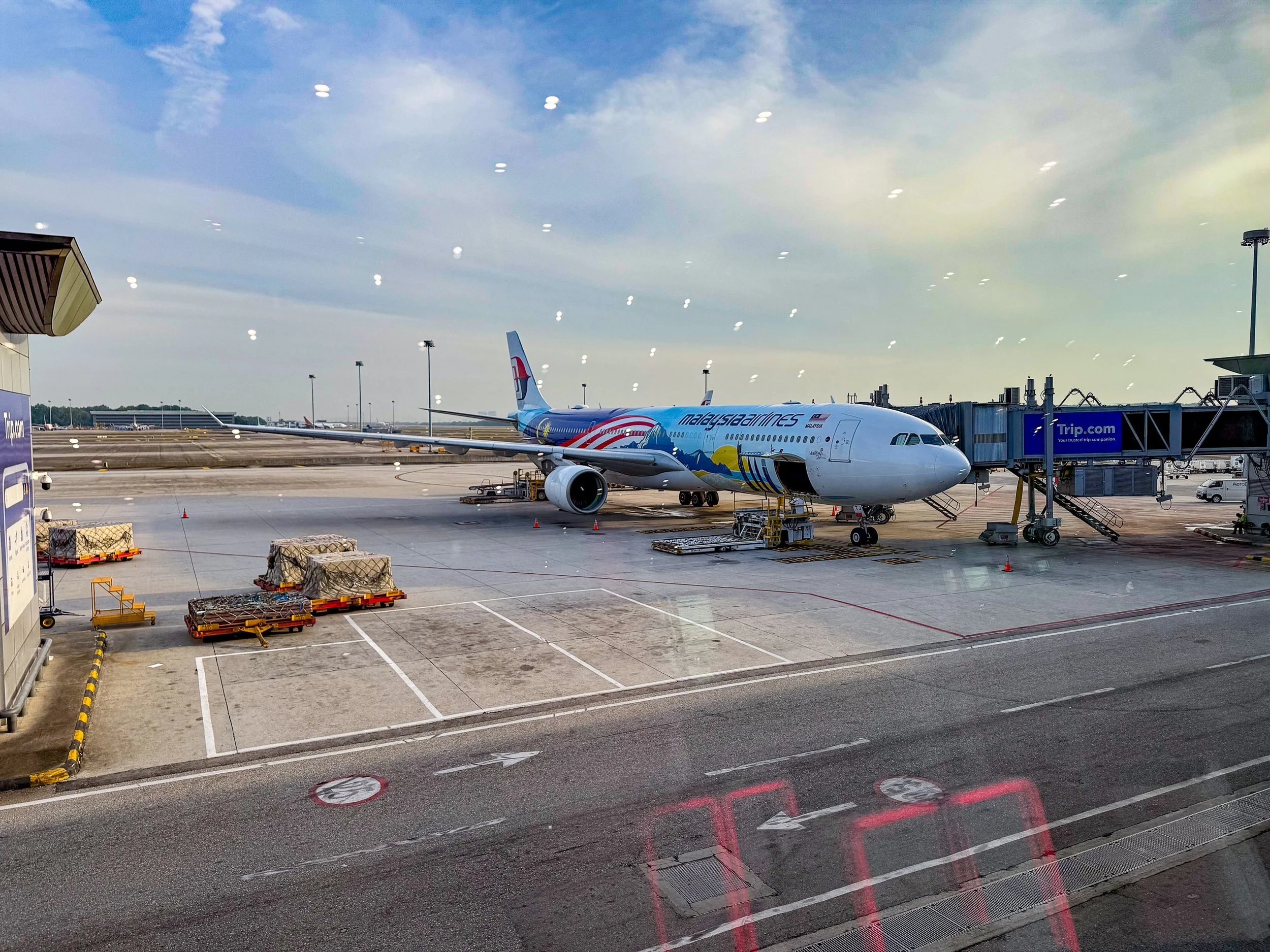
Malaysia Airlines Airbus A330-300 at Kuala Lumpur International Airport
Most of that came from Malaysia Airlines flying in and out of Kuala Lumpur:
Tokyo (NRT) → Kuala Lumpur (KUL) x2
Kuala Lumpur (KUL) → Tokyo (NRT) x2
Kuala Lumpur (KUL) → Denpasar/Bali (DPS)
Plus one Finnair sector:
Helsinki (HEL) → Doha (DOH)
My most-flown aircraft type in 2025 was the Airbus A330-300. It’s a widebody workhorse used around the world on routes that range from medium regional sectors to long-haul, and it ended up featuring heavily in my year for one simple reason: it kept showing up on the best-value itineraries I booked.
Most of my A330-300 flying came from Malaysia Airlines. The first block was my Bali trip in June 2025: Tokyo Narita (NRT) → Kuala Lumpur (KUL) → Denpasar/Bali (DPS), booked in business class for around ¥170,000, which felt like a bargain for a oneworld business class itinerary. One small disappointment: the Kuala Lumpur (KUL) → Denpasar/Bali (DPS) leg was supposed to be on the A330-900neo with the newer business class suites, but it got swapped to an A330-300. I only found out after landing from Narita into Kuala Lumpur, so it was a last-minute change I didn’t get to plan around.
Later in the year around Singapore F1 2025, I again routed via Kuala Lumpur, this time on an economy ticket: Tokyo Narita (NRT) → Kuala Lumpur (KUL) → Singapore (SIN) for ¥44,420 booked about a month out. The price was low enough that it beat the low-cost options I was seeing at the time.
Across those two trips, Malaysia Airlines accounted for five of my six A330-300 flights in 2025, including two return sectors between Tokyo (NRT) and Kuala Lumpur (KUL) plus the Kuala Lumpur (KUL) → Denpasar/Bali (DPS) sector.
The sixth A330-300 flight came from Finnair, on Helsinki (HEL) → Doha (DOH). It was part of a €395 one-way itinerary booked under a Qatar Airways (QR) code, connecting onwards to Cape Town. I was able to select premium economy seating on the Finnair-operated sector, which was a nice bonus.
The close second: Boeing 777-200ER
In the modern day of the 777-300ER, I still ended up logging meaningful time on the 777-200ER in 2025.
4 flights
32 hours
25,279 km
3 of those flights were on British Airways
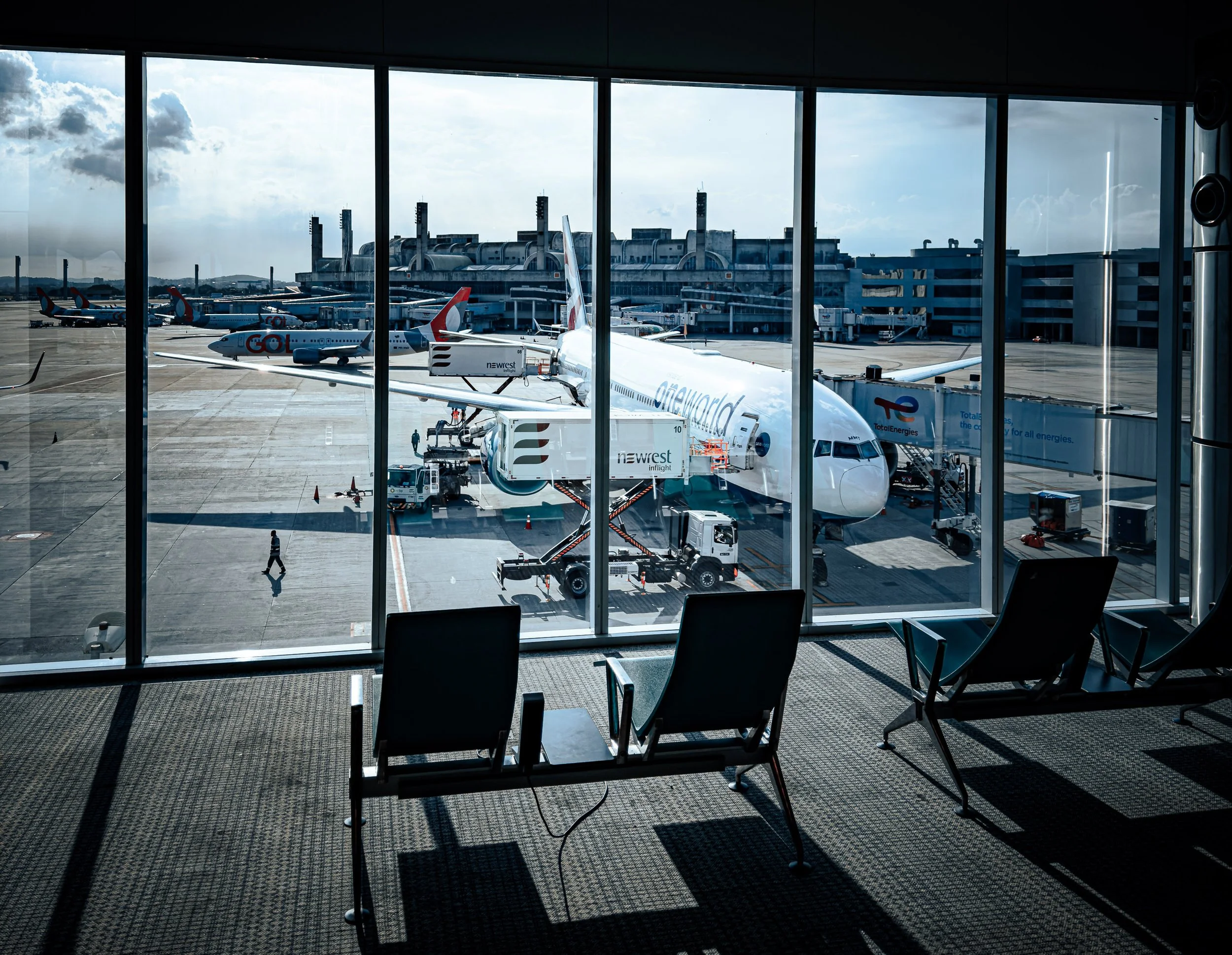
British Airways Boeing 777-200ER in oneworld livery, parked at gate in Rio de Janeiro/Galeão International Airport
In the modern day of the 777-300ER, one of the more unexpected patterns in my 2025 log was how much time I spent on the Boeing 777-200ER.
It finished just behind my A330-300 totals. The Airbus A330-300 led my year at 6 flights / 40 hours / 27,998 km, while the 777-200ER came in at 4 flights / 32 hours / 25,279 km. For an aircraft type with fewer flights, it still contributed a similar amount of time and distance, which says a lot about its role on long-haul routes.
Two of my biggest sectors of 2025 were on the 777-200ER:
British Airways BA248: Rio de Janeiro (GIG) → London (LHR) (3rd-longest by distance, 5th-longest by time)
American Airlines AA953: New York (JFK) → Buenos Aires (EZE) (4th-longest by distance)
Similar to how Malaysia Airlines drove my A330-300 numbers, the 777-200ER story for me was largely a British Airways story. That feels fitting, because British Airways was the launch customer for the 777-200ER, and it’s still a core long-haul type in their fleet today.
Aircraft leaderboard
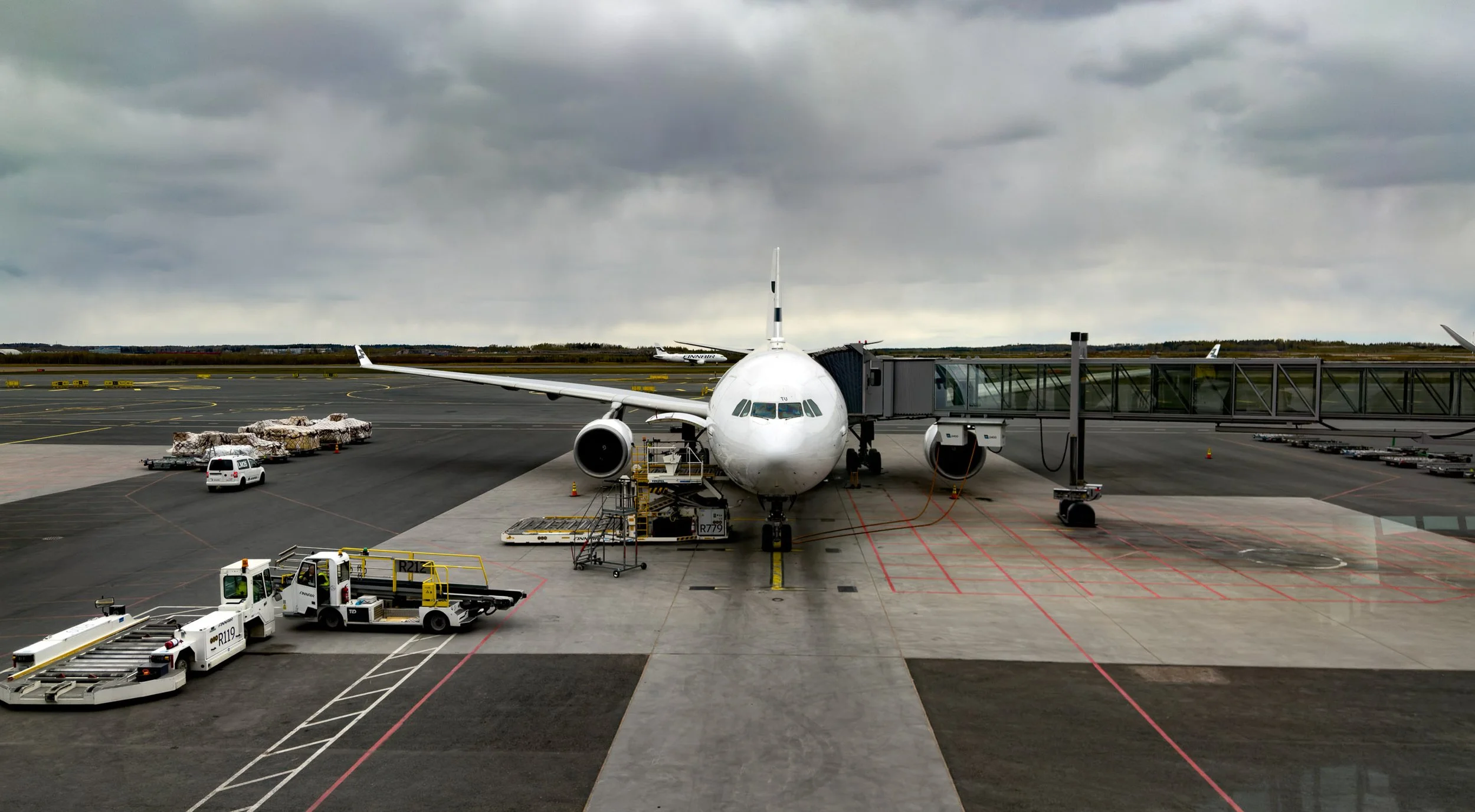
Finnair Airbus A330-300 at Helsinki-Vantaa Airport
Distance (top aircraft types)
Airbus A330-300 (A333) — 27,998 km
Boeing 777-200ER (B772) — 25,279 km
Airbus A380-800 (A388) — 23,856 km
Boeing 777-300ER (77W) — 19,051 km
Airbus A350-900 (A359) — 16,082 km
Airbus A350-1000 (A35K) — 12,969 km
Boeing 787-8 (788) — 9,831 km
Time (top aircraft types)
Airbus A330-300 (A333) — 40 hours
Boeing 777-200ER (B772) — 32 hours
Airbus A380-800 (A388) — 28 hours
Boeing 777-300ER (77W) — 28 hours
Airbus A350-900 (A359) — 26 hours
Boeing 787-8 (788) — 16 hours
Airbus A350-1000 (A35K) — 15 hours
Flight count
Airbus A330-300 (A333) — 6 flights
Boeing 787-8 (788) — 6 flights
Airbus A350-900 (A359) / Airbus A380-800 (A388) / Boeing 777-200ER (B772) / Boeing 777-300ER (77W) — 4 flights each
A few patterns stand out once you group my 2025 flying by aircraft type.
First, the Airbus A330-300 sits at the top across the board: total distance, total time, and flight count. I covered the context in the section above, but the headline is simple: it was the defining aircraft of my year.
The most interesting contrast is the Boeing 787-8. It tied the A330-300 on flight count (6 flights), but for a very different reason. Most of those sectors were Japan Airlines (JAL) domestic flights, mainly between Tokyo Haneda (HND) and Osaka Itami (ITM). The reason the 787-8 still shows up meaningfully on the distance and time totals is that one of those six flights was long-haul: Sydney (SYD) → Tokyo Haneda (HND) on Japan Airlines.
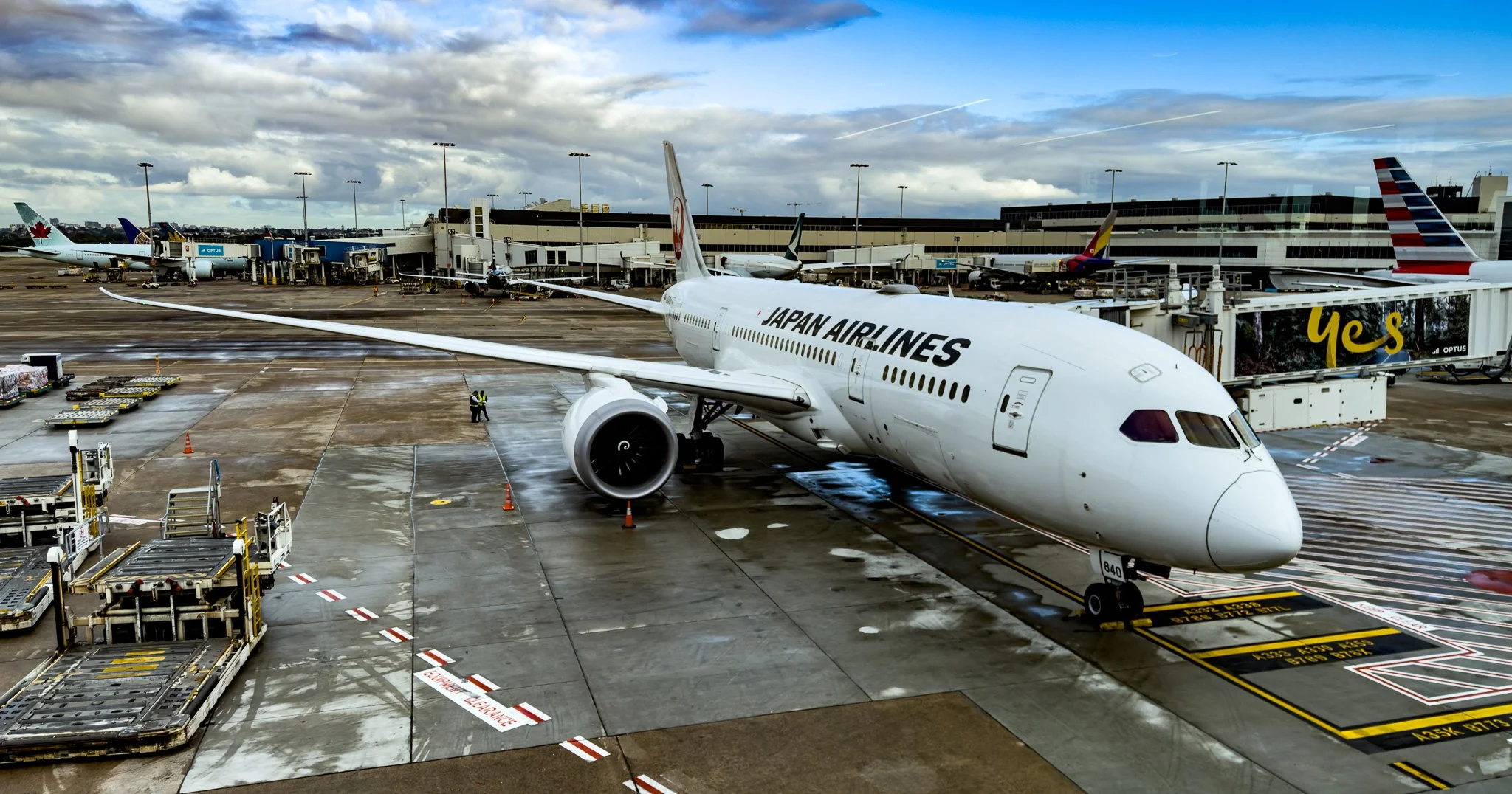
Japan Airlines Boeing 787-8 at Sydney Airport
We also already covered the Boeing 777-200ER, which sat just behind the A330-300 despite fewer flights, driven by long-haul sectors and heavy British Airways exposure.
After that, the leaderboard looks exactly like a long-haul year should. The standard widebody heavy hitters, Airbus A380, Airbus A350-900, and Boeing 777-300ER, all show up strongly across both distance and time, and they also appear in the flight-count list.
One fun detail is the Airbus A350-1000. I only flew it once in 2025, but that single flight, Cathay Pacific CX844: Hong Kong (HKG) → New York (JFK), was enough for it to appear in both the distance and time rankings. It also happened to be my longest flight of the year by both metrics, topping my longest-flight lists at 12,969 km and 15 hours 27 minutes.
Memorable flights
This recap is mostly numbers, but a few flights still stand out clearly.
Emirates First Class: Dubai (DXB) → Cairo (CAI)
My first time flying Emirates First Class, and it was memorable even on a shorter sector. It was less about the distance and more about finally getting to sample the product.
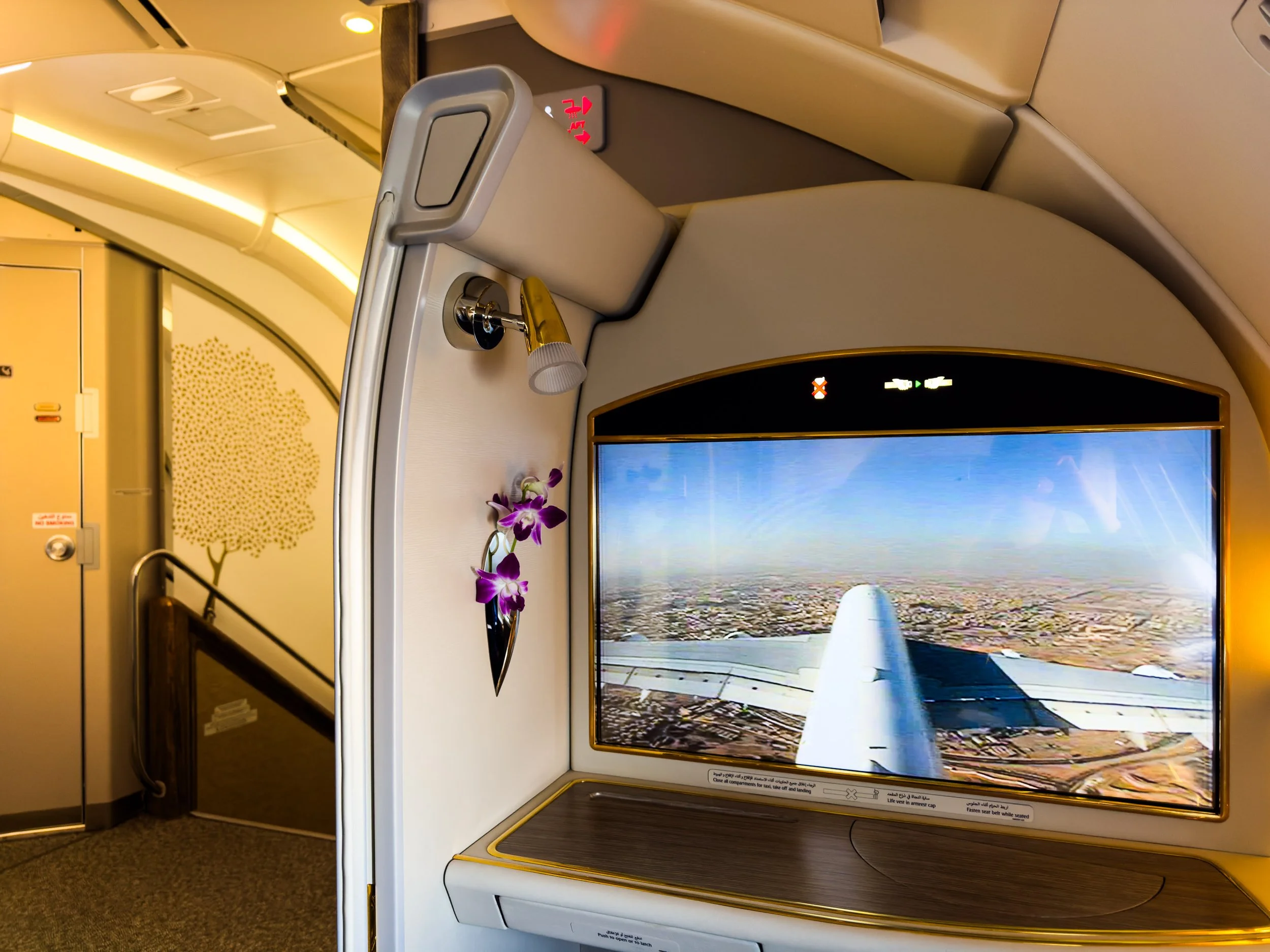
Emirates Airbus A380 First Class
I booked this ticket using points just before Emirates changed the rules so that First Class award tickets became restricted to eligible Emirates Skywards status holders.
Despite the flight being only 3 hours 49 minutes, I still managed to try the full set piece. Showering in the sky at cruising altitude is obviously not a necessity, but it’s an iconic Emirates gimmick. You get five minutes of water per passenger (with the ability to pause it), and on a longer flight I can see how a quick shower before landing would be genuinely refreshing.
Dining was the other highlight. I was welcomed onboard with Dom Pérignon, and the meal service started with their signature caviar. For my main, I had a glass of Château Lynch-Bages Bordeaux and, in hindsight, should probably have taken them up on a refill.
And then there’s the suite itself. The space, the storage, and the sheer number of amenities make it feel more like a private room than an airline seat. I’ve flown the Emirates A380 in business class before, so I skipped the onboard bar at the back of the upper deck, and I didn’t even touch the inflight entertainment. This was one of those flights where I just took it all in and enjoyed every moment of it.
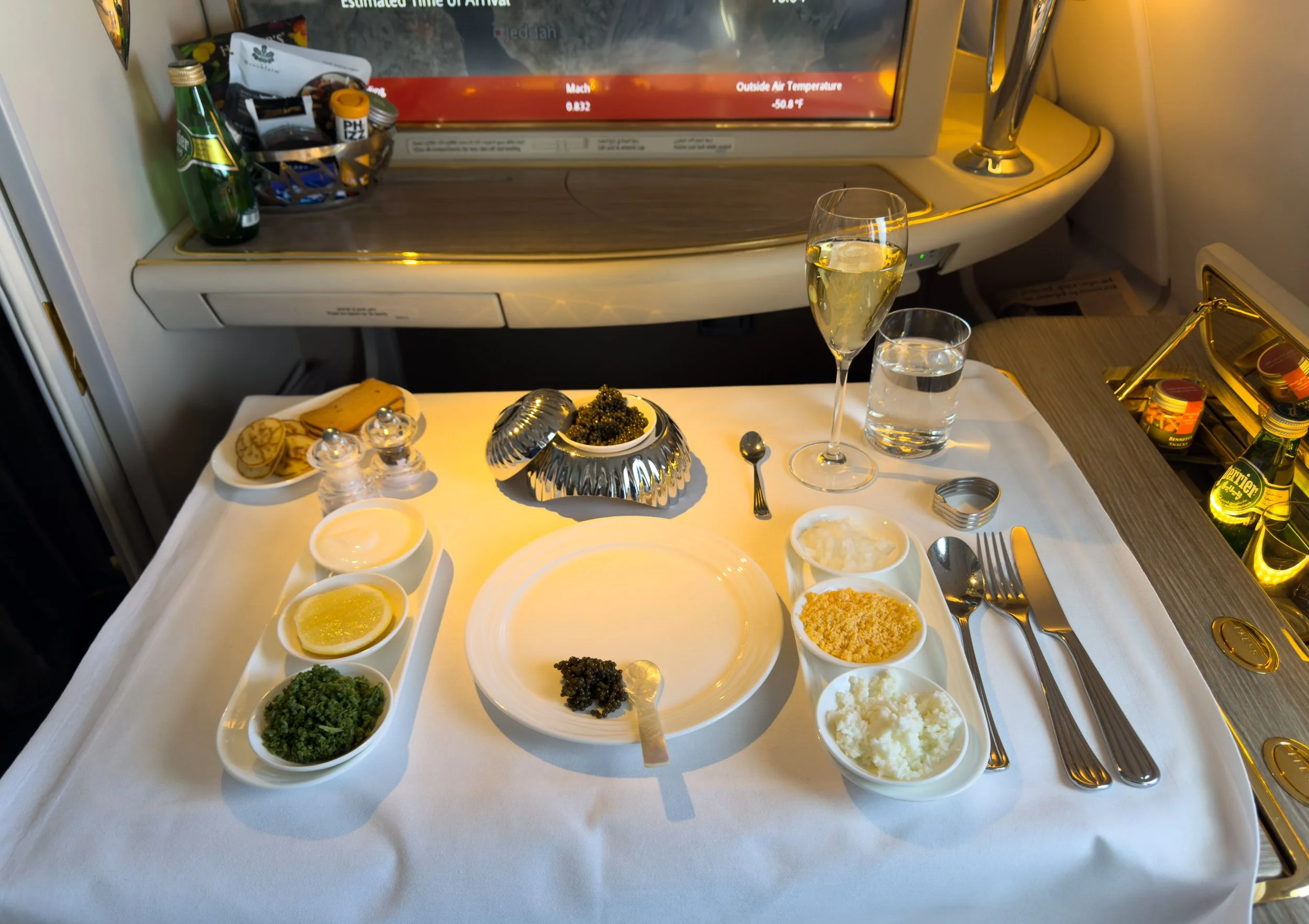
Caviar service on Emirates First Class
Qantas: Johannesburg (JNB) → Sydney (SYD)
This was my first trip to South Africa, and if I was going to make the journey, I really wanted to include Qantas Johannesburg (JNB) → Sydney (SYD) either on the way there or on the way back. It’s one of the rarer long-haul routes that stays entirely within the southern hemisphere, rather than simply starting or ending there.
It was also my first, and as of writing in March 2026 still my only, flight on the Qantas A380. It’s always fun to sample the A380 on a new airline, and with Qantas added, I’ve now flown the A380 on (in order of my first flight on each): Singapore Airlines, Thai, Lufthansa, Asiana, Malaysia Airlines, Emirates, Etihad, and Qantas.
From a stats perspective, it was one of the defining sectors of my year at 11,044 km and 11h 50m, ranking second-longest in 2025 by distance and near the top by time.
The practical side lined up nicely too. I was able to book the flight using British Airways Avios on the exact day I needed, then fly out the next morning on Japan Airlines from Sydney back to Tokyo, which made the return-to-Japan routing straightforward.
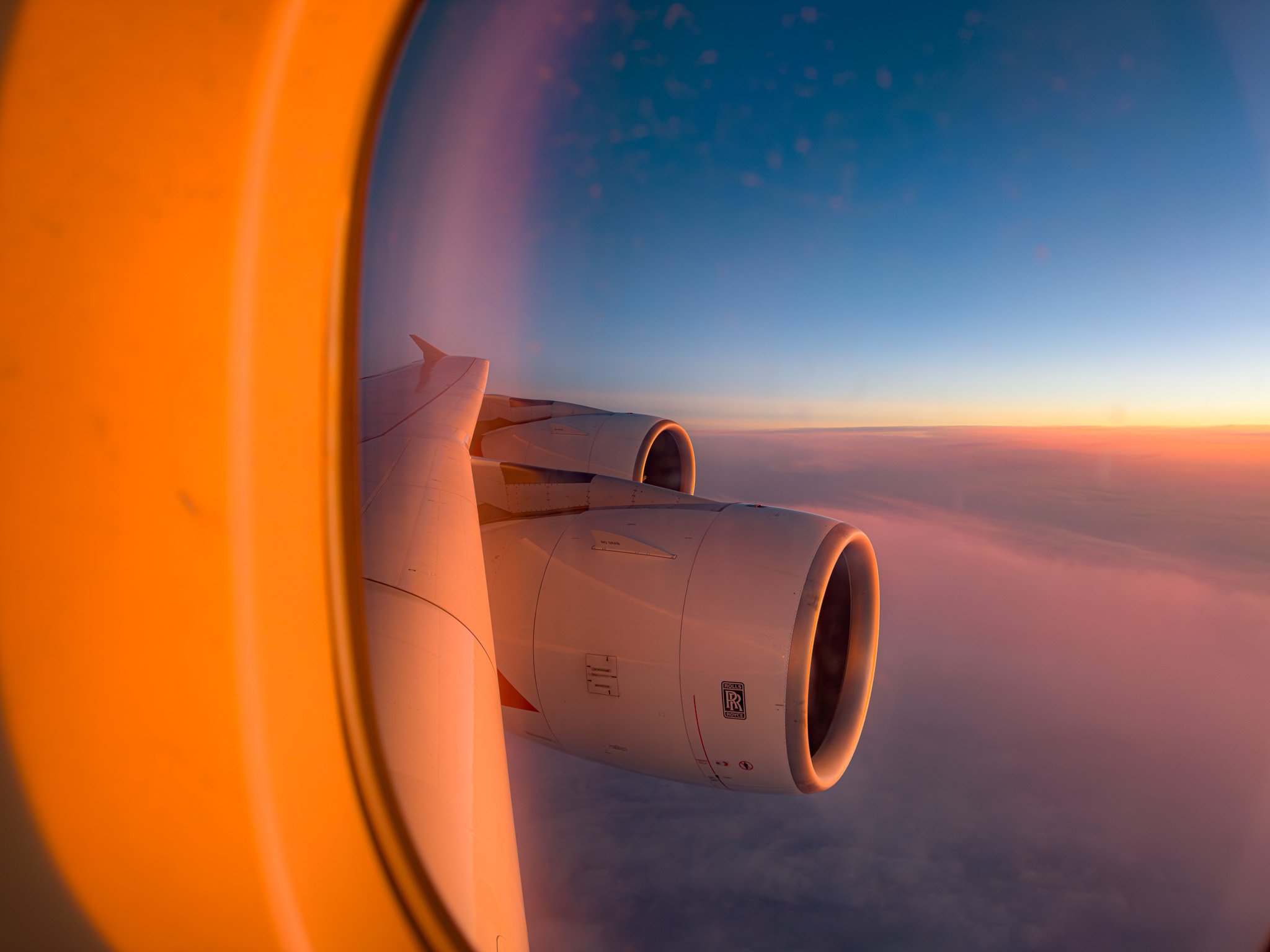
Sunrise wing view aboard Qantas Airbus A380 QF64 from Johannesburg to Sydney
British Airways: Buenos Aires (EZE) → Rio de Janeiro (GIG)
On my world tour in April and May 2025, one of the hardest pieces to line up was Buenos Aires to London. Options were limited, cash fares were high, and award space was basically nonexistent. So when a single economy award seat appeared on the exact date I wanted for Rio de Janeiro (GIG) → London (LHR), I booked it immediately using British Airways Avios.
That routing also came with a fun aviation detail: it was part of BA248, which includes a fifth freedom sector between Buenos Aires (EZE) and Rio de Janeiro (GIG) before continuing onward to London. Since I was starting in Buenos Aires anyway, I booked the EZE → GIG sector on Avios too and built in an overnight stop in Rio.
Splitting the journey turned out to be a win on costs as well. The taxes and fees ended up being much lower than booking EZE → LHR through on one ticket, and the difference more than covered a one-night hotel stay. It was also my first time in Brazil, so I used the stop to explore Rio de Janeiro properly, including a morning visit to Christ the Redeemer before heading to the airport for London.
One final twist: I originally booked this flight in economy, but when I checked the BA app before departure it showed business class. I hadn’t even booked premium economy (World Traveller Plus), so it was a very welcome surprise, and it may well have been helped by my British Airways Gold (oneworld Emerald) status at the time.
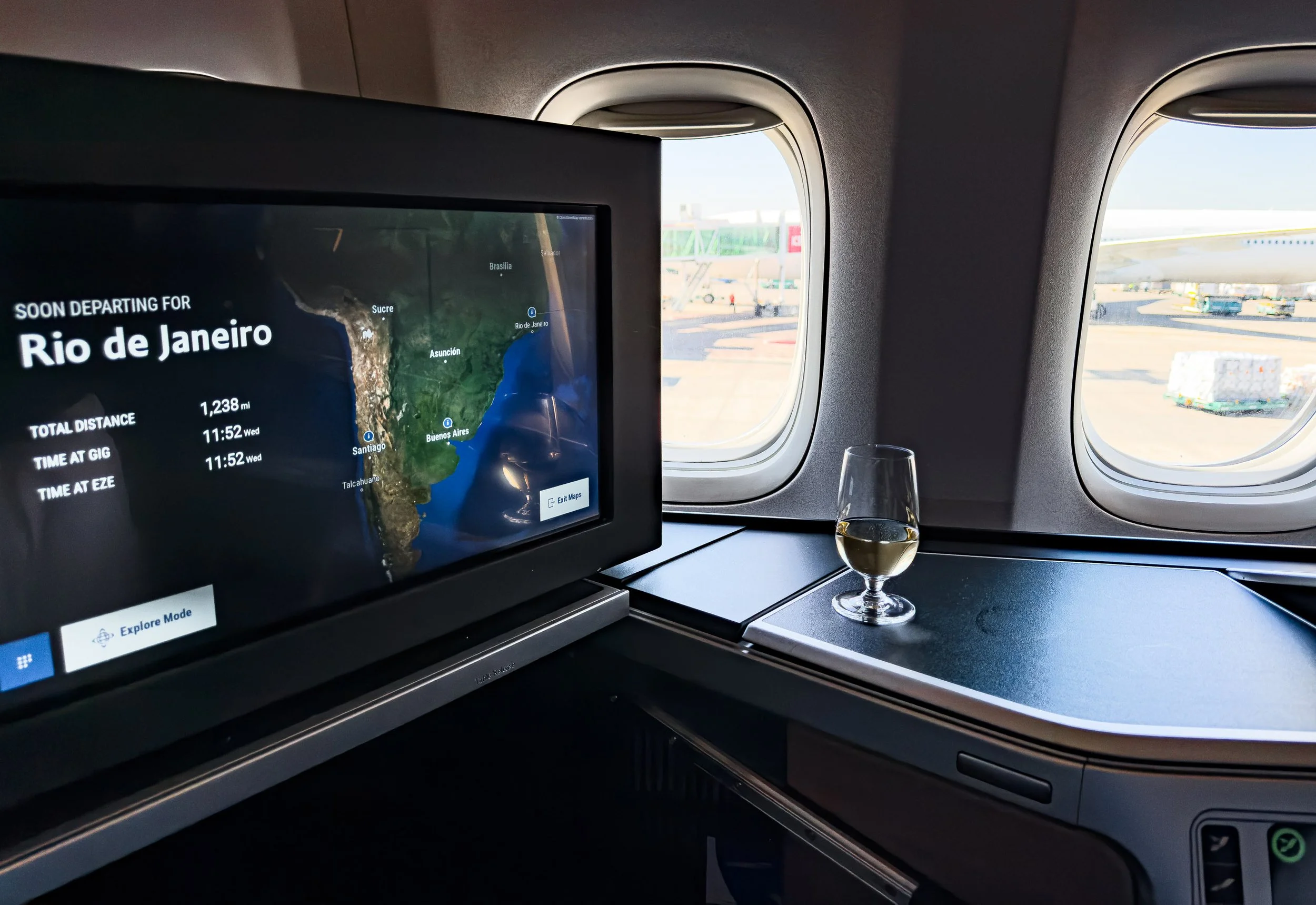
British Airways Boeing 777-200ER Club World (business class) on BA248, departing for Rio de Janeiro
Cathay Pacific: Hong Kong (HKG) → New York (JFK)
This was the headline flight of my 2025 log, at least when it comes to the longest flight of the year. Cathay Pacific CX844 from Hong Kong (HKG) to New York (JFK) topped my rankings by both distance (12,969 km) and time (15 hours 27 minutes).
The context was also unique. CX844 wasn’t a standalone trip. It was the second of three flights on a single journey from Tokyo Haneda (HND) to Buenos Aires (EZE) via Hong Kong and New York. I left Tokyo on Friday morning, landed at JFK in the early hours of Saturday, and later that same Saturday night continued south on American Airlines AA953 from New York (JFK) to Buenos Aires (EZE).
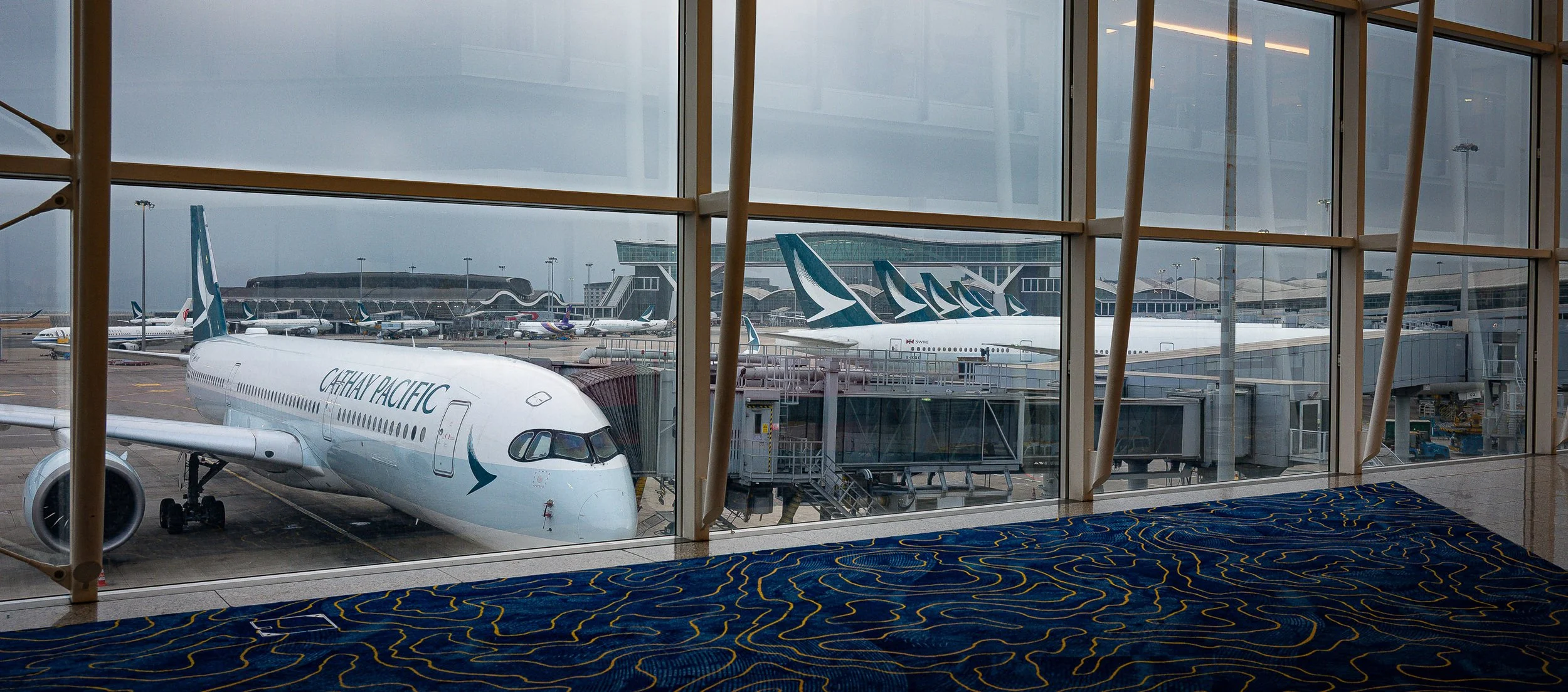
Cathay Pacific planes lined up at gates of Hong Kong International Airport
Cathay has been a consistent thread through my travel for years, so it’s fitting that my longest flight of 2025 was on CX. My first Cathay trip that I can remember was in 2012, flying Tokyo Narita (NRT) and Hong Kong (HKG). I still vividly remember the outbound being on the Airbus A340-300, and it was also my first real taste of a Cathay lounge.
Even now, whenever I’m flying Cathay (or oneworld), I usually make a point of stopping in at a Cathay Pacific lounge for a Cathay Delight and a bowl of dan dan noodles. I’ve done that in places like Tokyo Haneda, Hong Kong, Taipei, and London. Note that not every Cathay Pacific lounge offers Cathay Delight and Dan Dan Noodles. Singapore lounges with no Cathay Delight and Tokyo Narita lounges lacking both are the two notable exceptions for me.

Cathay Pacific signature, Cathay Delight (non-alcoholic drink) and Dan Dan Noodles, available in most of Cathay Pacific Lounges.
Cathay timeline (highlights by year)
2012: first Cathay trip I remember, Tokyo Narita (NRT) and Hong Kong (HKG), including an A340-300 sector and my first Cathay lounge experience
2015: Toronto (YYZ) to Hong Kong (HKG), heading to Hong Kong for an internship at UBS
2017: after switching my loyalty to oneworld, Cathay became a regular alongside Japan Airlines and Malaysia Airlines
2018: Tokyo Haneda (HND) to Hong Kong (HKG) to New York (JFK), return via Newark (EWR), flown in premium economy, plus a work trip from Tokyo Haneda (HND) to Singapore (SIN) via Hong Kong (HKG)
2019: Europe travel via Hong Kong, including a trip to London (LHR) and returning from Barcelona (BCN), plus a separate Hong Kong trip for the Macau Grand Prix and a visit to The Pier First Class lounge with my mum
2023: family trip to Kuala Lumpur (KUL) via Hong Kong (HKG), including the Cathay First Class lounge visit with my dad, plus a great-value Tokyo Narita (NRT) to Jakarta (CGK) business class ticket via Hong Kong (HKG) later that year
2024: work trip to Singapore (SIN) via Hong Kong (HKG) with 2 of 4 sectors upgraded from premium economy to business class, then a year-end Tokyo Narita (NRT) return trip to Hong Kong (HKG) where the return was upgraded from economy to premium economy
2025: the year’s longest flight, starting with Tokyo Haneda (HND) to Hong Kong (HKG), then CX844 to New York (JFK) on the way to South America
2026: Cathay again to Sydney (SYD) via Hong Kong (HKG) in February 2026 for my first visit to the Bathurst 12 Hour race
Since switching most of my flying to oneworld in 2017, Cathay has been in the mix almost every year, with the pandemic period being the main exception.
Closing note
Looking back, 2025 was a big flying year. I haven’t flown this much since 2018, which is still my highest flight-count year at 76 flights during a period of near-weekly status runs. Even then, 2018 totaled 171,708 km, and 2025 came surprisingly close at 157,505 km despite a much lower flight count.
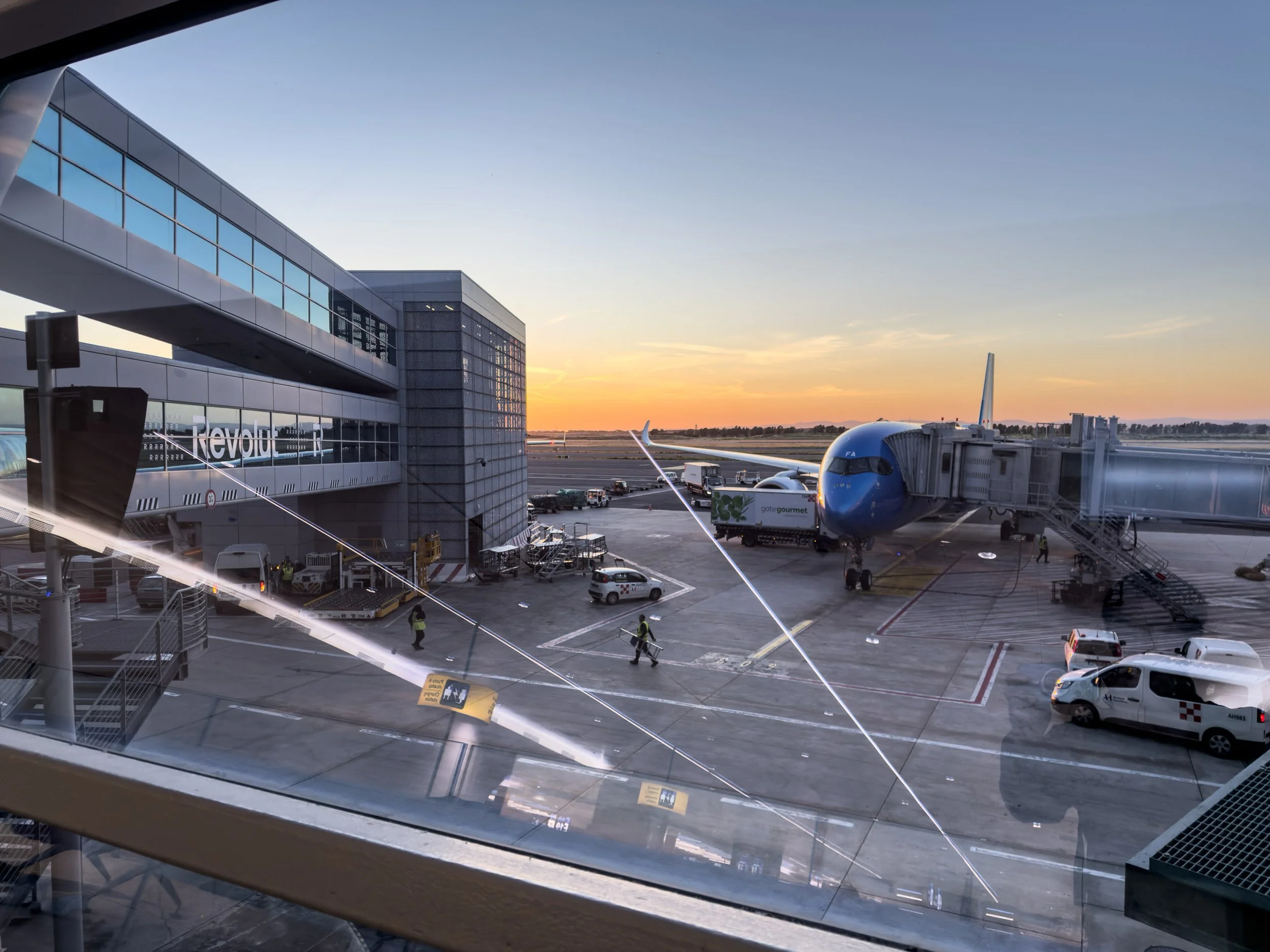
ITA Airways Airbus A350-900 at Rome Fiumicino Airport during sunset
It also felt like a landmark year in a different way. It wasn’t my first time crossing the Atlantic, but my April and May “world tour” during a career change really did feel like flying around the world. The headline destination in South America was Buenos Aires, Argentina, and I also got a small taste of Brazil along the way. I finally made it to Cape Town and South Africa, and also ticked off the Nordics with first visits to Finland, Sweden, and Norway. On top of that, I checked off a few long-standing wishlist items along the way, including Emirates First Class.
I wrote earlier about how I put that world tour itinerary together. If you’re curious about the planning side, you can read that post for the details on how I built the route and booked it.
And judging by how the first two months have gone, 2026 is already off to a good start on the flying and travel front.
