How I Go About Planning and Booking Flights

Cathay Pacific Airbus A330 at Hong Kong International Airport (HKG)
Initiation:
Where the Idea Starts
A question that people often ask me is how I go about planning my trips, and specifically how I go about booking flights.
For me, travel plans usually start in one of three ways.
Family Trip
As I mention on my About page, travel has always been part of our family DNA.
My parents and I all live in Japan, but not together anymore, and with my brother based in Singapore, trips are often our way of reconnecting.
Usually, my parents have a destination in mind, then my brother and I handle most of the logistics.
For 2025, that turned into a trip across Italy, with a focus on food across Milan–Florence–Rome. (In fact, our trips often revolve around food…)
The Purposeful Trip
Then there are trips with a clear reason: work, events, friends’ weddings, or a vacation, ticking a place off my list.
The (Occasional) Status Run
I used to do status runs which means flying purely to earn elite status, but not so much these days.
I already have semi-lifetime Star Alliance Gold with ANA and oneworld Sapphire with Japan Airlines, which I can maintain through credit cards (unless the program changes…).
Still, every now and then, I’ll take a domestic hop just for the sake of flying, while adding a few more lifetime status points.
Sometimes, my trips are even hybrids: part vacation, part status optimization.

Qatar Airways Qsuite Business Class sunset view
Flights planning
Once the idea’s set, I start configuring the flights, and here’s where it starts to get a little geeky.
Dates/Time
Even as a full-time working professional with limited annual leave, I try not to get overly fixated on dates.
If flying a day earlier or later makes the trip cheaper or more interesting, I’ll adjust accordingly.
Sometimes, the difference between departing on a Friday versus a Saturday can be significant enough that the savings often pay for a hotel night (and dinner) at the destination.
I also look at flight patterns — certain routes only operate on specific days of the week, and shifting by a day might open up an aircraft type or airline I prefer.
If I can line up my schedule around that, even better.
Paid Fare vs Award
Another big consideration is whether to use a paid fare or an award ticket.
I usually start with paid fares to understand the price range, then compare that against the miles required for an award seat.
If business class awards are available for reasonable mileage, that’s often a sweet spot.
On the flip side, if economy tickets are unusually expensive, I’ll happily use miles for economy instead.
It’s also fun to hunt for discounted business class fares.
Sometimes regional business class tickets are only slightly more expensive than discounted economy, and for longer flights, that upgrade in comfort, plus the extra miles and points, is absolutely worth it.
Tools and Research
Here are the tools I use most often:
Google Flights
My starting point for route discovery and quick price comparisons.ITA Matrix
Still useful for fare logic and advanced routing searches. Also helps identify the “true” fare.Airline websites
To double-check the fares found above, and my main tool for checking award space.
Unless it’s a multi-airline or complex itinerary, I usually book directly through airline sites.Expedia / Skyscanner / Kayak
Occasionally useful for spotting outliers or hidden fare combinations, and booking multi-airline or complex itineraries.
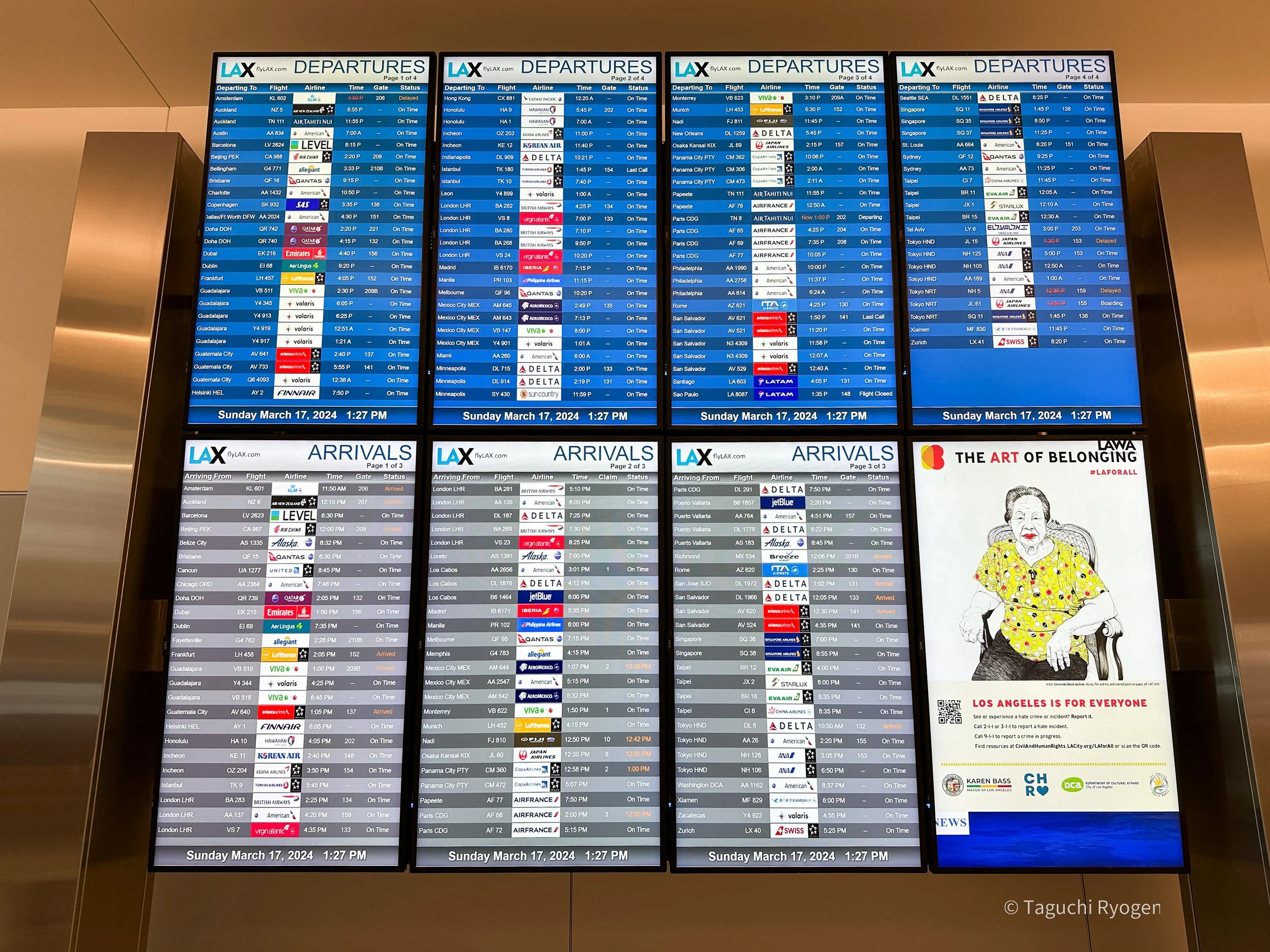
Departures and Arrivals board at Los Angeles International Airport (LAX)
Direct vs Connection vs Multi-City
The airline industry works in curious ways.
Direct flights are almost always pricier than connecting ones, because people pay for convenience.
But from a cost perspective, it doesn’t really make sense: two planes, two sets of crews, more fuel, more food.
But great for me.
Why pay more for less flying time when you could pay less and spend more time in the sky, ideally on newer aircraft, through airports with great lounges, and while earning extra miles along the way?
For me, travel efficiency isn’t just about saving money.
It’s about maximizing experience per money spent.
Sometimes, I deliberately route through hubs I’ve wanted to visit, lounges I’ve wanted to see, airlines I’ve wanted to try, or specific aircraft types I’ve wanted to fly.
Then there’s Multi-City.
Instead of a simple round trip, I often plan multi-city itineraries. A nice blend between a direct and connecting trip, and a great way to see more places within the same journey.
Especially with award tickets, adding extra segments can be surprisingly efficient.
Once you’re paying a fixed mileage band, extra legs usually cost little to no additional miles, so I’ll often increase segments to squeeze in more flights or destinations for the same redemption.
Side Trip
Speaking of connections, sometimes I’ll turn them into mini trips.
If I’m connecting through a city I’ve never been to, or cities I love, I’ll often add a stopover for a night or two.
This could come in the form of an airline hub city on a connecting itinerary, or simply a place along the route dictated by award availability or the cheapest fare.
Many airlines even allow free stopovers, so you’re effectively getting an extra destination for the same ticket price.
After all, if you’ve already paid less to fly more, you might as well make the most of it.
Closing
For me, flying is never just transportation.
It’s part of the journey and experience itself, from the anticipation at the airport to watching the world drift by beneath the clouds, drink in hand, enjoying the inflight meal and entertainment.
If you’d like some help optimizing your travel or flight plans, whether for cost, miles, or experience, then feel free to get in touch!
